
Athletes searching for sweat testing are usually trying to solve one problem. They want to know how much fluid and sodium they lose when they sweat, so they can hydrate accurately and avoid performance issues like cramping, fading power, or poor recovery.
There are several ways to test sweat. Each comes with benefits and limitations. Understanding those differences is essential before building a hydration strategy.
This guide explains the main types of sweat testing available today, with the positives and negatives of each, so athletes can make informed decisions.
1. Laboratory based sweat testing
What it is
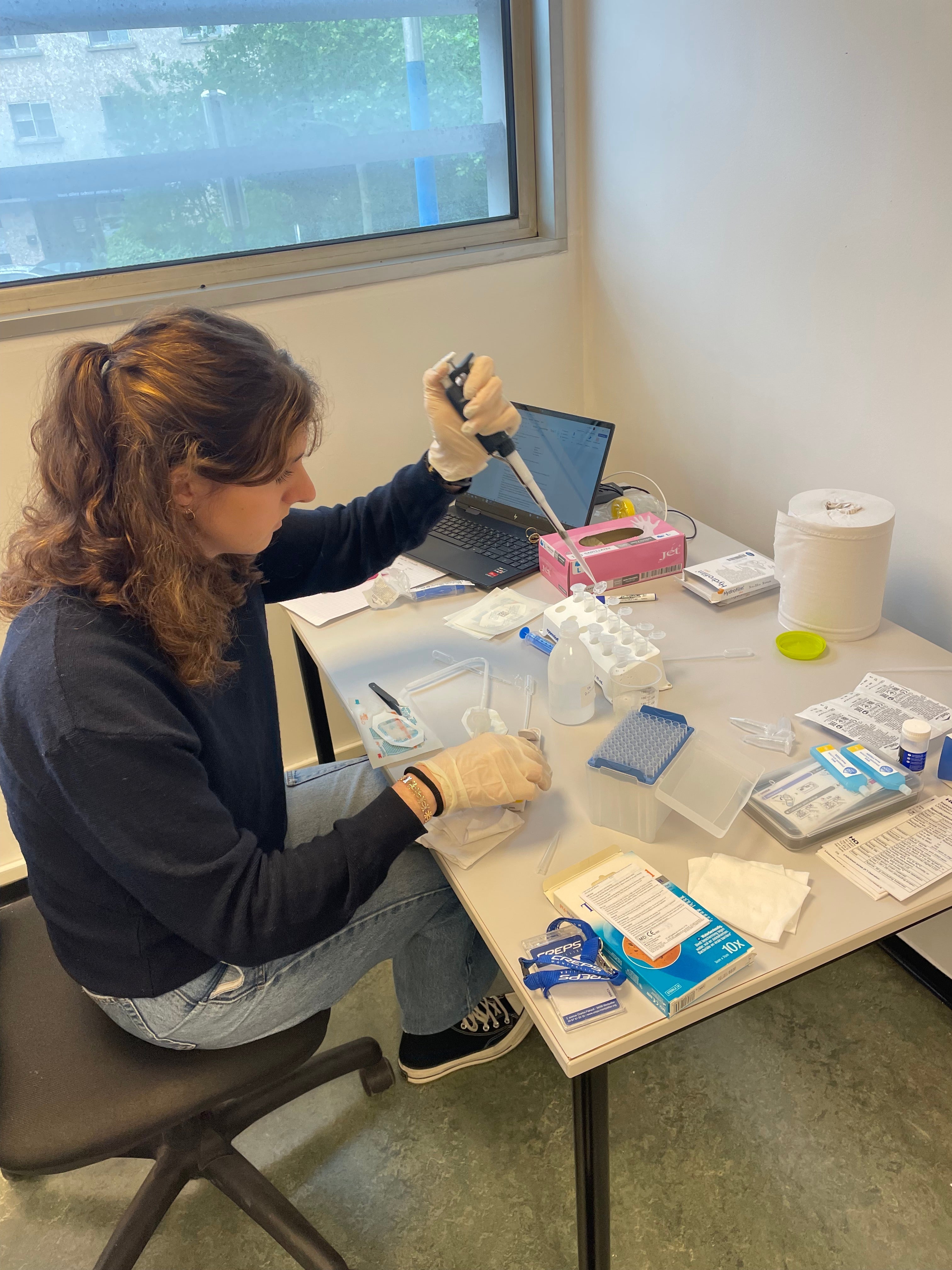
Laboratory sweat testing typically uses absorbent patches or whole body washdown methods. Sweat is collected during exercise and analysed later using laboratory equipment such as flame photometry.
Positives
Laboratory methods are considered the analytical gold standard for measuring sweat sodium concentration. They offer high precision under controlled conditions and are widely used in research.
Negatives
Lab testing is time consuming, expensive, and impractical for regular use. It requires controlled environments, specialist staff, and post exercise analysis. Results reflect a single session and do not adapt to changes in training load, fitness, or environment.
For most athletes, lab testing provides a snapshot rather than a usable hydration strategy.
2. Single use sweat patches.
What it is
These tests use adhesive patches worn during exercise. Sweat is absorbed, then analysed either on site or sent to a laboratory.
Positives
Sweat patches are more accessible than full laboratory testing. They can provide insight into sweat sodium concentration and are often used as a one time profiling tool.
Negatives
Patches require careful timing to avoid under collection or saturation. Results depend heavily on correct placement and handling. They provide an average value over a short window and cannot capture how sweat loss changes during a session.
They are also consumable, meaning repeated testing becomes costly.
3. Portable handheld sweat analysers
What it is
Handheld analysers measure sodium concentration from sweat collected in patches during exercise. They are often used pitch side or track side.
Positives
They offer faster results than lab analysis and can be used in field settings. When used correctly, they provide reasonable estimates of sweat sodium.
Negatives
They still rely on patch collection, sample handling, and operator skill. Accuracy can vary depending on environmental conditions and methodology. They do not measure whole body sweat loss directly and are not continuous.
4. Hydration and sweat rate calculators
What it is
Online calculators estimate sweat loss using predictive equations based on body size, power output, temperature, and humidity.
Positives
They are free or low cost, quick to use, and easy to access. Calculators can provide a rough starting point for hydration planning.
Negatives
They rely on population averages and assumptions. They do not measure sweat or sodium directly. Validation research shows that calculators can significantly underestimate sweat loss in hot, dry & humid conditions.
They are estimates, not measurements.
5. Wearable sweat sensors
What it is
Wearable sweat sensors measure sweat during exercise using sensors placed on the skin. They estimate sweat rate and sodium loss while the athlete is training or racing.
Positives
Wearable sensors allow sweat to be measured in real world conditions. They remove the need for patches, laboratory handling, and post session analysis. Data can be collected repeatedly, allowing athletes to track changes over time and refine hydration strategies.
Validation research shows that wearable sweat sensors can provide practical and consistent estimates of sweat loss suitable for hydration planning.
Negatives
Wearable sensors do not replace laboratory methods when absolute analytical precision is required. Like all field tools, their data should be interpreted in context rather than treated as a single definitive number.
Which sweat test is best for hydration strategy?
The best sweat test depends on the question being asked.
If the goal is maximum analytical precision for research, laboratory testing is appropriate.
If the goal is a one off profile, patches or handheld analysers may be useful.
If the goal is ongoing hydration strategy, wearable sweat sensors offer the most practical solution.
Hydration is not static. Sweat rate and sodium loss change with intensity, environment, fitness, and heat adaptation. A useful sweat test must reflect that reality.
Turning sweat data into action
Testing sweat is only valuable if it leads to better decisions.
FLOWBIO is designed to remove guesswork from hydration. The FLOWBIO Sensor analyses sweat during training. AHi® takes that sweat data, combines it with effort and environment, and turns it into personalised hydration insights.
- Wear the sensor.
- Capture sweat data.
- See results in the app.
- Act on the data.
Turn your sweat into data, your data into insight, and your insight into performance.
| Method | Measures | Strengths | Limitations |
|---|---|---|---|
| Laboratory testing | Sweat sodium and total sweat loss | Highest analytical precision under controlled conditions | Expensive, impractical for regular use, single session snapshot |
| Sweat patches | Regional sweat sodium | Accessible, useful for one off profiling | Handling sensitive, consumable, limited time window |
| Handheld analysers | Sweat sodium from patches | Faster field results than lab testing | Requires patch collection, no sweat loss measurement |
| Hydration calculators | Estimated sweat loss | Quick, low cost starting point | Based on averages, can underestimate sweat loss |
| Wearable sweat sensors | Sweat loss and sodium during exercise | Practical, repeatable, real world data | Not a replacement for lab grade analysis |
Sources
Bandiera D, de Bardonnèche J, Margout Jantac D, et al.
Sweat sodium composition and sweat loss estimation through wearable sensors and predictive equations in dry and humid hot conditions.
Frontiers in Physiology, 2026.
Baker LB.
Sweating rate and sweat sodium concentration in athletes: methodology and variability.
Sports Medicine, 2017.
Sawka MN et al.
Exercise and fluid replacement.
Medicine & Science in Sports & Exercise, 2007.
Share:
How Accurate Are Sweat Sensors? A Science Led Guide to Sweat, Hydration, and Electrolytes
Real Life or Lab-Based? A comparison of different sweat analysis methods