
Sweat is data.But only if you understand what the data actually means. Athletes searching for sweat sensors are usually trying to answer one question. Can I trust sweat, hydration, and electrolyte data enough to base my training and racing decisions on it?
This guide explains what accuracy means in sweat measurement, how sweat sensors compare to other hydration tools, and how athletes should use sweat data to build a personalised hydration strategy.
What is a sweat sensor?
A sweat sensor is a wearable device designed to measure sweat related metrics during exercise, most commonly sweat rate and electrolyte loss such as sodium.
Sweat sensors help athletes understand how much fluid and sodium they lose when they sweat, allowing hydration strategies to be based on individual data rather than population averages.
How accurate are sweat sensors?
The accuracy of sweat sensors depends on how closely their measurements align with reference methods and whether the data is reliable enough to guide hydration decisions.
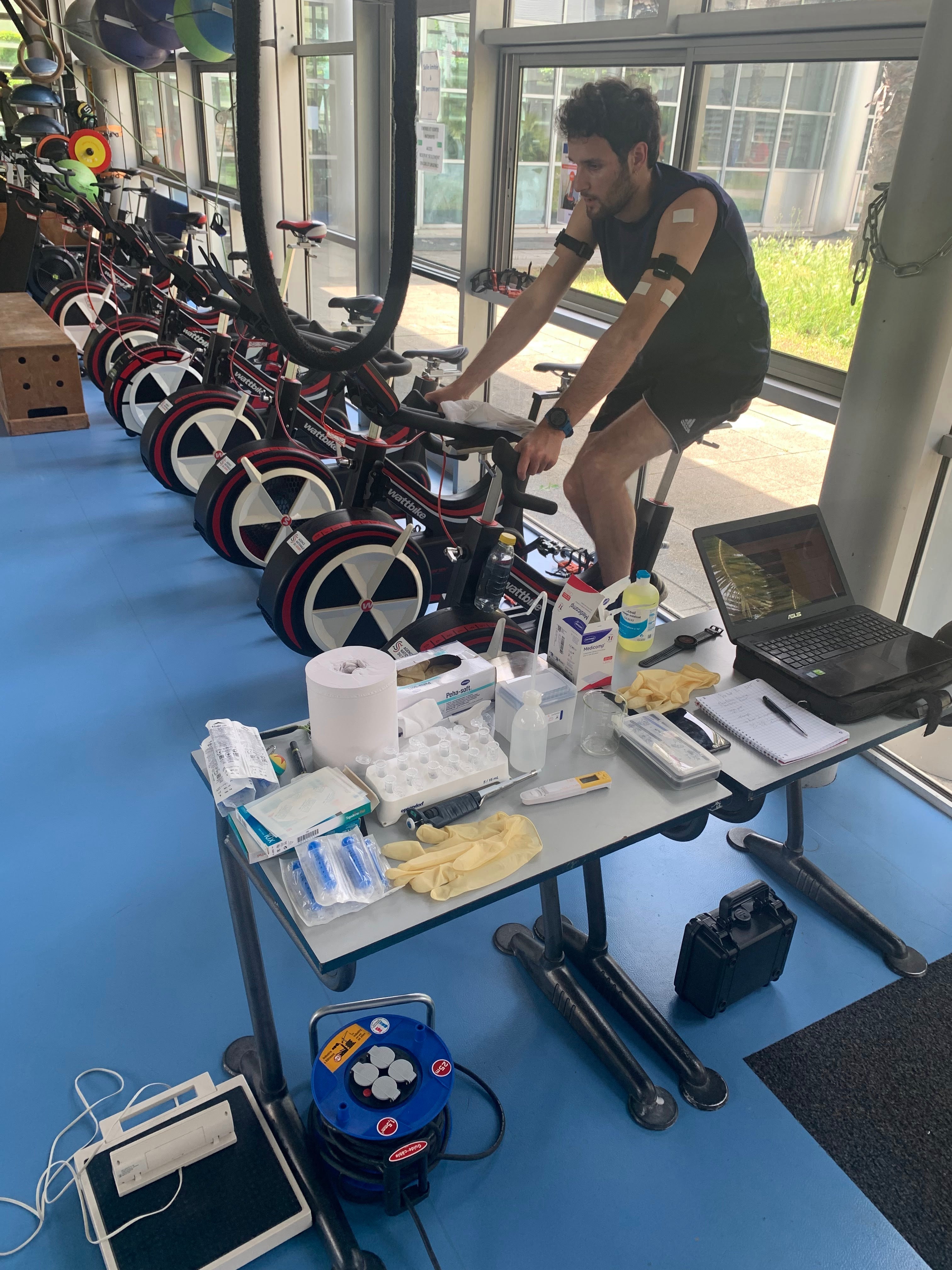
In a peer reviewed validation study published in Frontiers in Physiology, the FLOWBIO sweat sensor was compared against laboratory gold standard methods for measuring sweat sodium concentration and whole body sweat loss. The study showed that FLOWBIO produced consistent and practical measurements suitable for real world hydration planning.
What does accuracy mean in sweat measurement?
Accuracy in sweat measurement refers to how well a device reflects true physiological sweat loss and electrolyte loss during exercise.
For athletes, accuracy means knowing fluid loss per hour, sodium loss per litre, and how these values change with exercise intensity and environmental conditions. Accurate sweat data helps athletes avoid dehydration, overhydration, and electrolyte imbalance.
Is lab based sweat testing more accurate than wearable sweat sensors?
Laboratory methods such as flame photometry are considered the analytical gold standard for measuring sweat sodium concentration. However, they require controlled environments, absorbent patches, sample handling, and post exercise analysis.
Wearable sweat sensors trade some laboratory precision for practicality, allowing sweat to be measured during real training and racing conditions.
Validation data shows that FLOWBIO produces sweat sodium values comparable to accepted field methods, while offering significantly greater practicality for athletes.
Can sweat sensors measure sodium accurately enough for hydration planning?
Yes, when used appropriately.
The validation study found that wearable sweat sensors underestimated absolute sweat sodium compared to laboratory flame photometry. However, when converted into whole body sodium loss, the difference represented less than half a teaspoon of table salt for the exercise sessions tested. From a hydration strategy perspective, this level of variation is unlikely to meaningfully affect electrolyte replacement decisions.
How does a sweat sensor measure sweat loss?
Sweat sensors estimate sweat loss by combining direct physiological measurements with contextual data such as effort and environmental conditions.
In the validation study, whole body sweat loss estimated by the FLOWBIO sensor showed no significant difference from the gold standard method of measuring body mass change before and after exercise. This indicates that wearable sweat sensors can provide accurate estimates of fluid loss when scale based methods are impractical.
Are hydration calculators accurate?
Hydration calculators estimate sweat loss using predictive equations based on variables such as body size, power output, temperature, and humidity.
The validation study found that a commonly used sweat rate calculator significantly underestimated sweat loss compared to both scale based measurements and wearable sweat sensor data, particularly in very hot or very humid conditions. This suggests that calculators should be used with caution for personalised hydration planning.
Why does sweat rate vary between athletes?
Sweat rate varies due to differences in physiology, fitness level, heat adaptation, exercise intensity, body size, and environmental conditions.
Validation data reinforces that sweat loss and sweat sodium concentration vary widely between individuals, even when exercising at similar intensities.
This variability explains why generic hydration advice often fails.
Does humidity affect sweat loss and hydration needs?
Yes. The study showed that whole body sweat loss was lower in humid conditions compared to dry heat, despite similar exercise intensity and core temperature. This highlights the importance of measuring sweat loss rather than assuming hydration needs based solely on temperature.
Are sweat sensors useful for endurance athletes?
Yes. Endurance athletes are particularly sensitive to hydration errors because small mismatches in fluid or sodium intake accumulate over long durations.
Wearable sweat sensors allow endurance athletes to personalise hydration strategies based on their own sweat data rather than population averages.
How should athletes use sweat sensor data?
Sweat sensor data should be used to inform hydration strategy, not replace common sense.
Athletes can use sweat data to understand fluid loss rates, estimate sodium needs, and refine hydration plans over time. Reviewing trends across multiple sessions is often more valuable than focusing on a single workout.
What are the benefits of personalised hydration?
Personalised hydration helps athletes maintain performance, manage heat stress, reduce cramping risk, and recover more effectively.
By understanding individual sweat and electrolyte loss, athletes can plan hydration strategies that match their physiology rather than relying on generic recommendations.
Are sweat sensors useful for heat adaptation?
Yes. Validation data showed that wearable sweat sensors demonstrated adequate consistency for tracking changes in sweat sodium over time. This makes them suitable for monitoring adaptations such as reduced sodium concentration that often occur with heat acclimation.
What are the limitations of sweat sensors?
Sweat sensors do not replace laboratory analysis when absolute precision is required.
Their value lies in providing practical, repeatable, and actionable data during real training and racing, where laboratory testing is not possible.
Why is measuring sweat better than guessing hydration?
Guessing hydration often leads to under drinking, over drinking, or inappropriate electrolyte intake.
Measuring sweat allows athletes to base hydration decisions on evidence, reducing risk and supporting more consistent performance across training and competition.
Sources
Sweat sodium composition and sweat loss estimation through wearable sensors and predictive equations in dry and humid hot conditions. - Bandiera D, de Bardonnèche J, Margout Jantac D, et al.
Frontiers in Physiology, 2026.
Share:
FLOWBIO Sweat Sensor validation: Why we are the world's most accurate sweat sensor.
Comparing Sweat Tests: What Are the Different Types and Which One Should You Trust?